Toyota Challenge
We had about two weeks to design a system that detects whether a child has been left in a car seat after the driver exits the vehicle, then present it to a panel of professors and company engineers. Our team of four (Kyle Braasch, Josh Heimann, Drew Nicholas and me) took first place. Here is how we got to the solution.
Breaking down the problem
We split the problem into three states we needed to identify:
- The state of the driver
- The state of the car
- The state of the child
Each state got its own sensors:
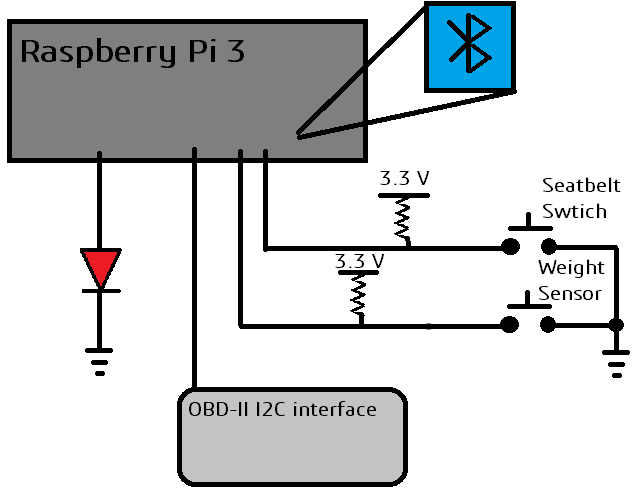
- Car: OBD-II
- Child: weight sensor and harness sensor
- Driver: Bluetooth range connection, driver door status and key status
Choosing an approach
A decision matrix compared three options: a car seat add-on, a standalone car seat and a full car integration. We scored them on ease of use, ease of implementation, safety factor, reliability, durability and cost. A standalone car seat came out ahead.
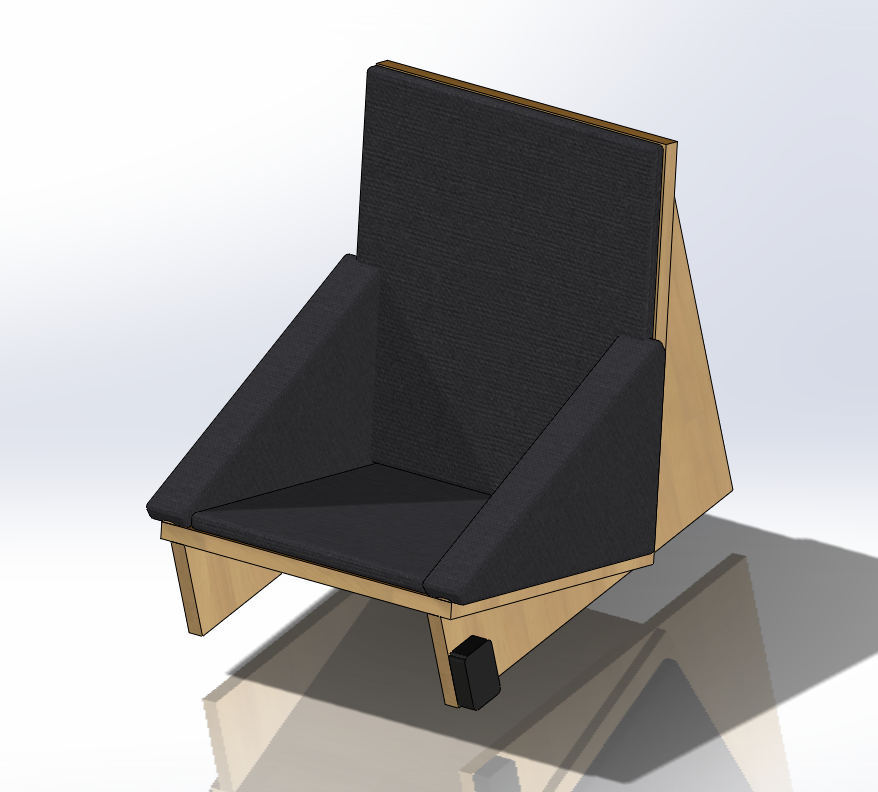
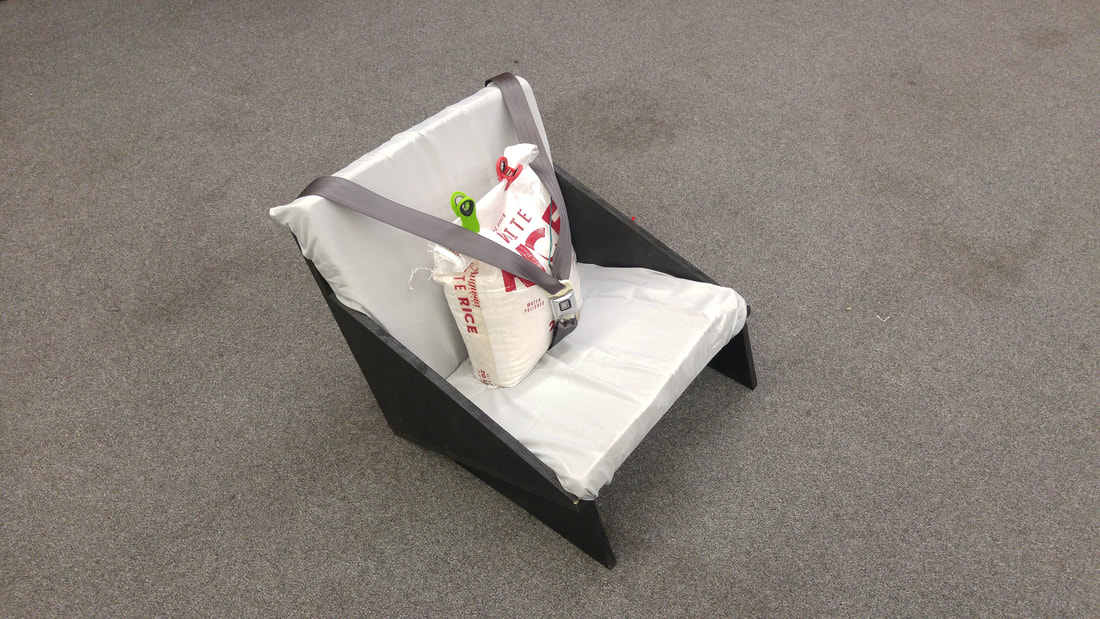
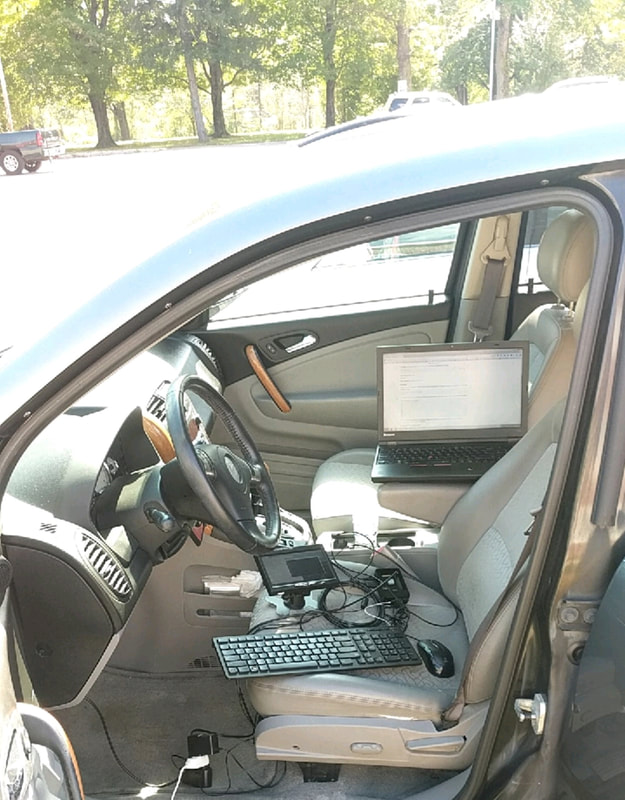
After researching OBD-II, we picked the Raspberry Pi 3 as the main processor. It has built-in Bluetooth, easy GPIO access and a simple interface to an OBD-II interpreter. We used the Freematics OBD-II i2c converter to read the car's on-board diagnostics, and built a model car seat from wood, fabric and cushions.
How the prototype works
If the seat senses weight and the seat belt is attached, the system assumes a child is in the seat. If the OBD-II connection reports the engine below 100 RPM (below idle speed), the car is off. If the Raspberry Pi loses its connection to the driver's phone, which is most likely when the driver walks away, the driver is gone. When all three conditions are true, the system reports a dangerous situation for the child.
What would come next
The prototype leaves plenty of room for improvement, but it was a good model for proving the concept. A commercial version would need custom OBD-II commands from auto manufacturers so it could flash the hazards or beep the horn, and would likely add an ambient temperature sensor for more refined responses.
Team members
With Luke Gelfius. Kyle Braasch also has a personal site at kylebraasch.com.